
Sustainable Supply Chain Management

In today’s rapidly evolving world, the need for sustainable supply chain management has become more critical than ever.

Sustainable supply chain management is a holistic approach that aligns business objectives with environmental and social goals.
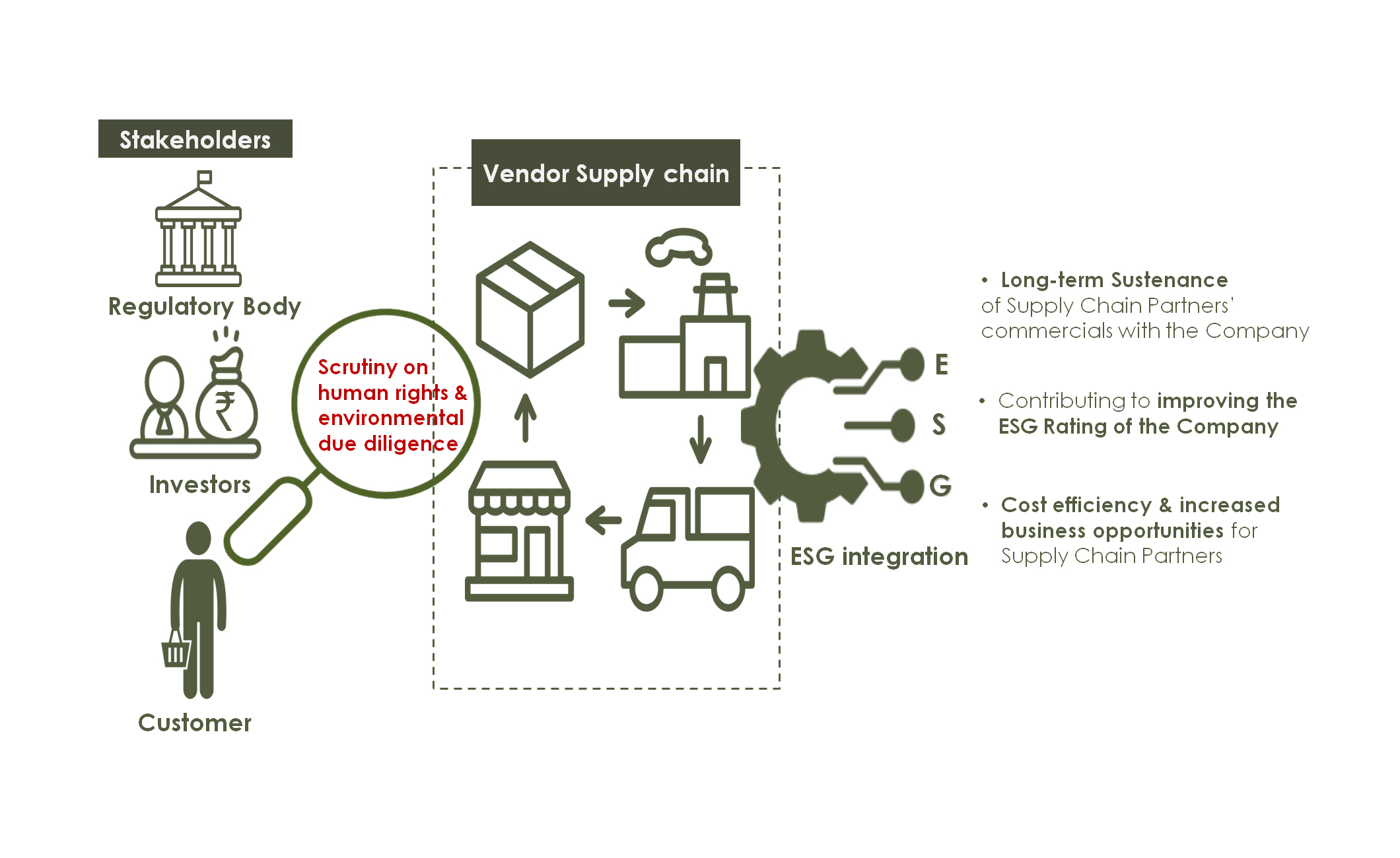
As global challenges such as climate change, social inequality, and resource scarcity loom, businesses recognise the urgency to prioritise environmental and social responsibility throughout their supply chain processes.

Sustainable supply chain management is essential for organisations looking to minimise environmental impact, promote social responsibility, comply with regulations, mitigate supply chain disruptions, protect brand reputation, achieve cost savings, and drive positive change.

By adopting sustainable practices, companies can actively reduce their Environmental footprint, prioritise worker well-being and ethical sourcing, adhere to stricter regulations, mitigate risks, enhance brand image, optimise operational efficiency, and foster innovation & collaboration. These practices enable businesses to align the supply chain with their sustainability goals, enhance stakeholder trust, attract sustainability-conscious consumers, and gain a competitive advantage in the market.

It is a holistic approach that aligns business objectives with environmental and social goals, ensuring the long-term viability of vendors & suppliers and combinedly contributing to a sustainable future

At Bilancia, we offer comprehensive Sustainable Supply Chain Management services to support and optimise your supply chain activities. Our expertise extends across various crucial areas, enabling us to ensure responsible practices while achieving sustainability goals. By leveraging our experience and best practices, we help you transform your supply chain into a driver of Sustainable change.

Risk Assessment


We assess the sustainability/ESG risks associated with your supply chain and implement strategies to enhance the sustainability of the supply chain, thus safeguarding your brand reputation and ensuring compliance with industry standards and regulations.

Measurement & Mitigation of Environmental Impacts


We help you assess the potential environmental impacts of your carbon footprint, water usage, and other resource consumption. With this data, we help you develop strategies to mitigate adverse effects on local communities and the environment.

FAQ

Why is sustainable supply chain management critical for Indian companies?
Supply chains typically account for over 80% of a company’s environmental impact and 70-90% of Scope 3 emissions. With regulations like EU’s Carbon Border Adjustment Mechanism (CBAM) and Corporate Sustainability Due Diligence Directive affecting Indian exporters, sustainable supply chain management is essential for market access, risk mitigation, operational efficiency, and maintaining competitiveness in global markets.
How do I assess sustainability risks in my supply chain?
Begin with supplier mapping to identify high-risk categories based on emissions intensity, environmental impact, and social risks. Develop ESG scorecards evaluating suppliers on carbon footprint, water usage, waste management, labor practices, and governance. Conduct on-site audits for critical suppliers, use third-party certifications, and implement digital traceability systems to monitor compliance and performance across tiers.
What is the cost of implementing sustainable supply chain practices?
Initial investment for supply chain sustainability assessments ranges from ₹8-20 lakhs depending on complexity. Ongoing costs include supplier training programs, monitoring systems, and audits. However, companies typically achieve 15-30% cost savings through improved resource efficiency, waste reduction, and logistics optimization. Long-term benefits include risk reduction, premium pricing opportunities, and preferential access to international markets.
How can I engage my suppliers in sustainability initiatives?
Effective supplier engagement includes setting clear sustainability expectations in contracts, providing capacity building through toolkits and training programs, offering technical support for emissions measurement, creating incentive structures rewarding sustainability performance, establishing long-term partnerships that enable investment in improvements, and collaborating on innovation for circular solutions and low-carbon alternatives.
Does sustainable supply chain management affect my company's competitiveness?
Sustainable supply chain management enhances competitiveness by reducing operational risks, improving resource efficiency, meeting international client requirements, accessing ESG-conscious investors, and building brand reputation. Indian companies with robust supply chain sustainability practices secure preferential supplier status with multinational corporations and differentiate themselves in increasingly environment-conscious domestic and export markets.
What technologies can help manage sustainable supply chains in India?
Digital solutions include blockchain for traceability and transparency, IoT sensors for real-time monitoring of environmental parameters, AI-powered analytics for emissions estimation and optimization, cloud-based supplier collaboration platforms, and ESG management software like SAP Sustainability Control Tower or Workiva. These technologies improve data accuracy, reduce manual effort, and enable proactive risk management across complex supply networks.